
It happened on a perfectly ordinary Tuesday.
I was standing in line for coffee, half-awake, scrolling through messages, when my phone slipped out of my hand. Not a dramatic fall. Not even a cinematic slow-motion drop. Just… plop.
But when I picked it up, the screen had turned into a spiderweb of cracks.
You know that moment when your heart sinks just a little? Yeah, that.
I stared at it, hoping it would magically fix itself (it didn’t), and suddenly realized something terrifying: my entire life was in that device.
Contacts. Banking apps. Photos. Work emails. Even my food delivery apps—arguably the most critical.
And just like that, I entered the world of mobile repair in the U.S.—a space most of us don’t think about… until we absolutely have to.
When Your Phone Breaks, Everything Pauses
We like to believe we’re not that dependent on our phones.
But try living without one for a day.
No maps. No quick payments. No ride-hailing. No instant communication.
It’s like being dropped into 2005, but without the nostalgia.
In the U.S., where everything moves fast, a broken phone isn’t just an inconvenience—it’s a disruption. And that’s why mobile repair services have quietly become essential.
The First Question: Repair or Replace?
Standing outside that coffee shop, I Googled the obvious:
“Should I repair my phone or buy a new one?”
The answer wasn’t as straightforward as I hoped.
Here’s what I discovered—something most people in the U.S. face every day:
Repair Makes Sense When:
- The damage is minor (like a cracked screen or weak battery)
- The phone is relatively new
- Repair cost is significantly lower than replacement
Replacement Makes Sense When:
- Internal components are damaged
- The repair cost is close to buying a new device
- The phone is already outdated
I quickly realized something: most issues are fixable.
And surprisingly, repairs are often cheaper and faster than people assume.
The Hidden World of Mobile Repair Shops
Later that day, I walked into a small mobile repair shop tucked between a laundromat and a pizza place.
Not exactly glamorous.
But inside? A different story.
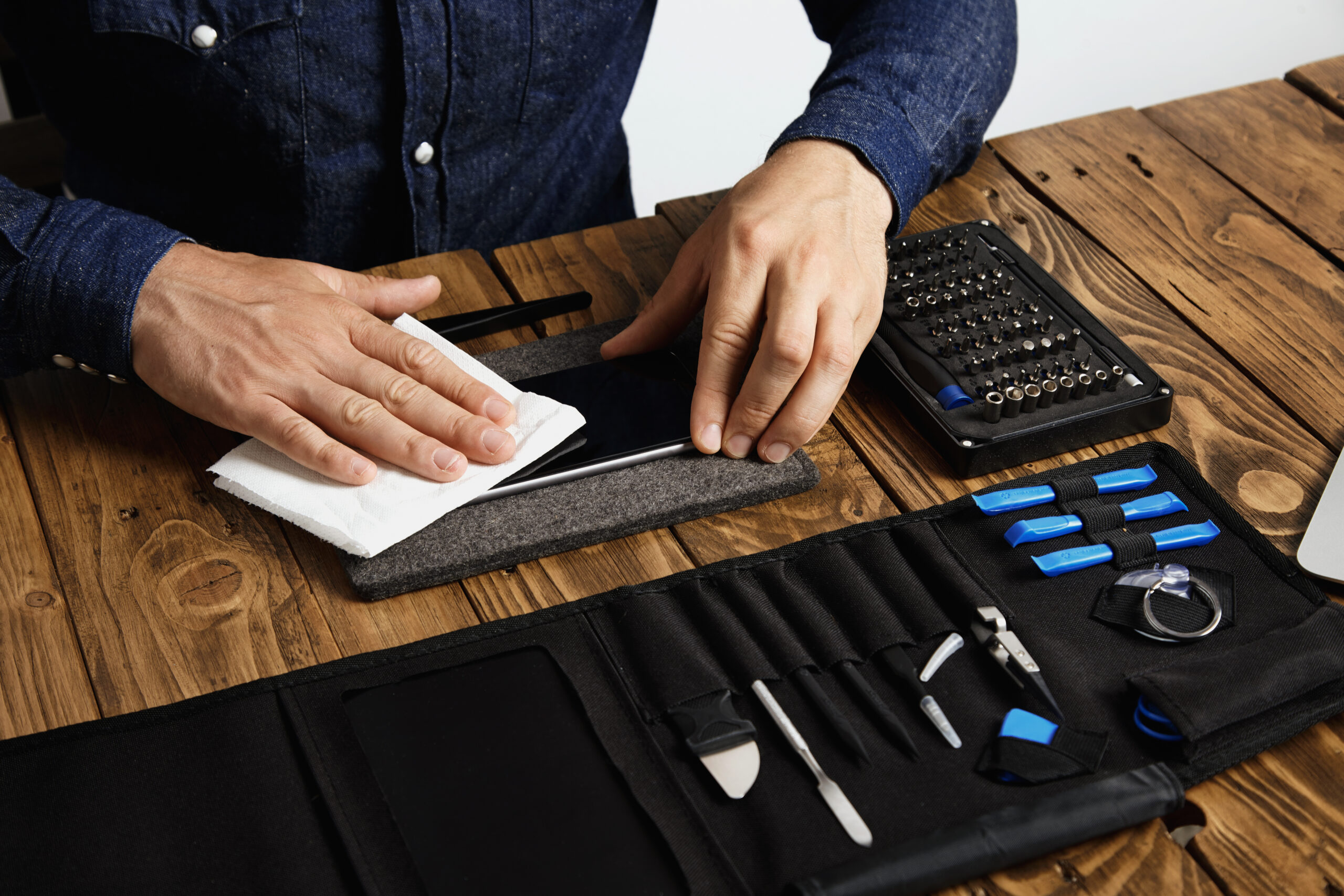
There were technicians working with surgical precision—tiny tools, magnifying lenses, careful hands. It felt less like a shop and more like a tech emergency room.
One technician looked at my phone and said, casually:
“Yeah, we can fix this in about 30 minutes.”
Thirty minutes?!
I had mentally prepared for days.
That’s when I learned something interesting about the U.S. repair ecosystem:
1. Speed is Everything
Many shops offer same-day repairs, especially for common issues like:
- Screen replacement
- Battery replacement
- Charging port fixes
2. Competition Keeps Prices Reasonable
There are thousands of independent repair stores across the country. That competition helps keep costs in check.
3. Skill Matters More Than Branding
A small local shop can sometimes do a better job than a big-name service center—if the technician is experienced.
The Rise of “Right to Repair”
While waiting for my phone, I struck up a conversation with the technician.
He mentioned something I hadn’t heard before: the “Right to Repair” movement.
In simple terms, it’s about giving consumers the freedom to fix their own devices—or choose who fixes them—without restrictions from manufacturers.
Why does this matter?
Because for years, many companies made repairs difficult:
- Limited access to parts
- Specialized tools only available to authorized centers
- High repair costs pushing people toward replacement
But things are changing.
Several U.S. states are pushing laws that support repair accessibility. This means:
- More transparency
- Easier access to parts
- Lower repair costs in the long run
For everyday users, that’s a big win.
The Real Cost of Ignoring Repairs
Here’s something we don’t talk about enough:
A small issue today can become a big problem tomorrow.
That tiny crack in your screen? It can:
- Spread over time
- Let moisture seep in
- Damage internal components
A weak battery? It can:
- Overheat
- Reduce performance
- Eventually stop working altogether
In the U.S., where people often delay repairs (because life is busy), these small issues quietly grow into expensive ones.
Lesson learned: fix it early.
DIY Repairs: Brave or Risky?
At one point, I considered fixing the phone myself.
After all, there are countless tutorials online.
How hard could it be?
Well…
Let’s just say: harder than it looks.
Modern smartphones are incredibly compact and delicate. One wrong move can:
- Damage internal circuits
- Void warranties
- Turn a minor issue into a major one
DIY repair works if:
- You have the right tools
- You follow reliable guides
- You’re comfortable taking risks
But for most people? A professional repair is safer—and often worth the cost.
Mobile Repair at Your Doorstep
Here’s something cool about the U.S. market:
You don’t always have to go to a shop.
There are now mobile repair services that come to you.
Imagine this:
You’re at home. Your phone is broken. Instead of traveling, a technician shows up, fixes it in your living room, and leaves.
Convenient, right?
These services are growing fast because they fit perfectly into modern lifestyles.
Time is valuable. Convenience wins.
What to Look for in a Good Repair Service
After my experience, I started noticing how people choose repair services.
It’s not random—it’s a mix of trust, price, and convenience.
Here’s what really matters:
Reviews and Reputation
Online reviews can tell you a lot. Consistent positive feedback is a good sign.
Warranty on Repairs
Good shops offer warranties on parts and labor. That shows confidence in their work.
Transparent Pricing
No one likes surprise costs. A reliable service will explain charges clearly.
Quality of Parts
Cheap parts might save money upfront—but can cause problems later.
A Quick Reality Check About “Cheap Repairs”
We all love a good deal.
But when it comes to mobile repair, too cheap can be risky.
Some shops cut costs by using low-quality parts. The result?
- Screens that don’t feel right
- Batteries that drain quickly
- Repairs that don’t last
It’s like fixing a car with fake parts—it works… until it doesn’t.
Sometimes, paying a little more saves you a lot later.
The Environmental Side No One Talks About
Here’s a surprising angle:
Repairing your phone isn’t just good for your wallet—it’s good for the planet.
Electronic waste is a growing problem in the U.S.
Millions of devices are discarded every year, even when they’re repairable.
By choosing repair over replacement, you:
- Reduce e-waste
- Extend device life
- Lower environmental impact
It’s a small decision with a big ripple effect.
Back to My Story…
Thirty minutes later, my phone was back in my hand.
New screen. Smooth touch. Good as new.
Honestly, I expected it to feel different—but it didn’t.
And the best part?
It cost way less than buying a new phone.
Walking out of that shop, I felt oddly satisfied—not just because my phone was fixed, but because I had learned something valuable:
Not everything broken needs to be replaced.
Why Mobile Repair Matters More Than Ever
Think about it.
Our phones are no longer just gadgets. They’re:
- Our wallets
- Our maps
- Our cameras
- Our connection to the world
In a country like the U.S., where digital life is deeply integrated into daily routines, mobile repair services aren’t just helpful—they’re essential.
They keep life running smoothly.
Quietly, efficiently, and often unnoticed.
A Simple Takeaway
Next time your phone acts up—maybe the battery drains too fast, or the screen has a small crack—pause before rushing to buy a new one.
Ask yourself:
- Can this be repaired?
- Is it worth fixing?
- Am I choosing convenience over sustainability?
Because sometimes, the smartest move isn’t replacing something—it’s giving it a second life.
Final Thought
That cracked screen on a random Tuesday taught me more than I expected.
It reminded me that in a world obsessed with upgrades, there’s something powerful about repair.
It’s practical. It’s sustainable. And surprisingly, it’s often the better choice.
So the next time your phone slips from your hand—and let’s be honest, it will—don’t panic.
There’s a whole world of skilled hands ready to bring it back to life.
And chances are, it won’t take more than 30 minutes.